
Your roof shields your home from rain, wind, and whatever the British weather throws at it. Even the best roofs eventually need a bit of TLC to keep them in good shape. Small issues can quickly spiral into bigger headaches if you ignore them. Knowing the most common roof repairs helps you spot trouble early and act before it gets worse.
From leaking flashing to cracked tiles, most roof issues fall into a handful of categories. We’ll walk you through the repairs we see most often and what usually causes them.
This guide covers everything from simple fixes like replacing worn tiles to more involved work such as resealing skylights and patching flat roof membranes. You’ll also get a sense of what affects your roof’s condition and how to keep it in good order.
If you spot any signs of damage, don’t wait – get in touch for a free quote. Sometimes it’s just a small fix, but sometimes it’s the start of something bigger.
1) Leaking flashing repair (chimney and valley flashing)
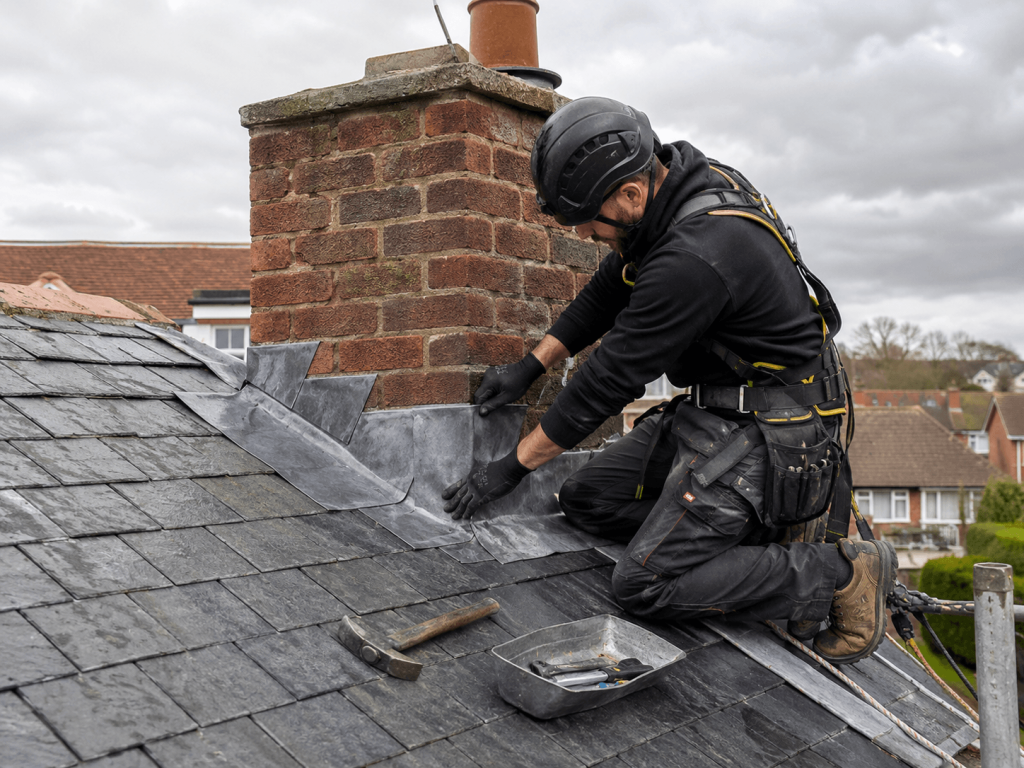
Flashing is what keeps water out where your roof meets things like chimneys or in the valleys where two slopes come together. When flashing fails, water sneaks in and causes all sorts of problems inside your home.
Chimney flashing is probably the most common source of roof leaks. Lots of folks blame the tiles, but honestly, it’s usually the flashing that’s failed – either because the lead or metal has deteriorated, pulled away, or wasn’t installed right to begin with.
Valley flashing is another trouble spot. Water rushes down these valleys, so if there’s even a tiny gap, you’ll notice water stains or damp patches below.
Flashing comes in materials like lead, copper, aluminium, or galvanised steel. Lead is the old-school choice for chimneys in the UK, but valleys can use different stuff depending on your roof.
We repair flashing by removing the bad bits, checking for leaks or rot underneath, and fitting new flashing with the right overlaps and seals. It’s not really a DIY job – working at height and understanding how water flows across your roof takes experience.
It’s smart to have your flashing checked during regular roof inspections. Spotting small flashing issues early can save you from expensive water damage and mould later. If you see stains near your chimney or valleys, get in touch for a quote before things get worse.
2) Tile replacement (clay or concrete tiles)
Broken or cracked roof tiles need quick replacement to keep water out. Both clay and concrete tiles can crack from impacts, wild weather, or just age.
We often find individual tiles that have slipped or split. Even one damaged tile can let water in, which then messes with the felt and timber underneath.
Clay tiles are traditional and can last decades, but they’re a bit more fragile than concrete. They’re also heavier, so your roof needs to be built for them. Concrete tiles are tough and cheaper, but they might fade a bit in the sun over time.
To replace a tile, we carefully take out the damaged one, check the battens and felt below, and pop in a new tile that matches the rest. No rocket science, but it does take a steady hand.
Look out for these signs you need tile replacement:
- Cracked or broken tiles
- Tiles on the ground after a storm
- Water stains on your ceiling
- Obvious gaps where tiles have slipped
Clay and concrete tiles don’t need much fuss once they’re in, but it’s worth checking for moss or debris that can trap moisture and speed up deterioration.
These repairs aren’t for the faint-hearted – the weight and height make it a job for pros. If you spot damaged tiles, call someone local. Quick, common roof repairs like this can stop bigger, costlier problems down the road.
3) Flat roof membrane patching (EPDM/TPO)
Flat roofs with EPDM or TPO membranes eventually need some attention. Punctures, tears, and failed seams are common roof repairs we see on these roofs.
EPDM (rubber) and TPO (thermoplastic) are both popular. They’re tough, but accidents happen – branches fall, people walk on them, or the weather just gets nasty. When that happens, patching is often the way to go.
We usually deal with three main issues:
- Small holes or punctures
- Torn membrane sections
- Seams that have come apart
A well-done patch can last as long as the roof itself. We clean the damaged area, put down primer, and bond a patch that matches the existing membrane. The trick is making it watertight.
For EPDM, we use rubber patches and special adhesives. TPO needs heat-welded patches – traditional glue just doesn’t cut it. That’s part of why TPO repairs usually need pro tools.
Quick DIY fixes might buy you a few weeks, but a proper repair should last for years. The price depends on how bad the damage is and how easy it is to reach. Usually, small patches are way cheaper than replacing the whole thing.
Timing matters. Small problems on flat roofs can get out of hand fast. Water spreads under the membrane and can wreck insulation and decking. What starts as a simple patch can turn into a nightmare if you wait too long.
We recommend checking flat roofs at least twice a year, especially after storms. Catching issues early is half the battle.
4) Gutter and downpipe realignment and repair
Gutters and downpipes might not be glamorous, but they’re crucial for keeping water away from your home. When they fail, water overflows and can mess with your walls, foundations, and even your roof.
The usual suspects? Blockages from leaves and debris, sagging gutters from broken brackets, and leaks at the joints or in cracked sections. Misaligned downpipes are another headache – if they pull away or disconnect, water pools where it shouldn’t, right near your foundation.
It’s a good idea to check your gutters twice a year, especially after autumn leaves pile up. Look for:
- Water sitting in the gutters
- Gaps at joints
- Loose brackets
- Downpipes that are wobbly or broken
- Overflow marks on your walls
Some gutter repairs are easy – clear the blockage, reseal a joint, tighten a bracket. But realigning or replacing sections takes the right tools and know-how about slope and flow.
Metal and plastic gutters need different fixes, and using the wrong sealant can make things worse. If your gutters have lots of issues, it’s worth getting a pro to check if repair or replacement makes more sense. A solid gutter system is one of those common roof repairs that can save you a lot of grief.
5) Skylight resealing and flashing repair
Skylights are notorious for leaks when their seals or flashing fail. Water sneaks in around the frame, leading to stains or worse inside your home.
Over time, the sealant around skylights just gives up – thanks, sun and rain. That opens the door for leaks. The metal flashing around the skylight can also corrode, crack, or pull away as it ages.
We usually fix skylight leaks by pulling out the old, crusty sealant and putting in fresh waterproof material. Sometimes, we have to dig deeper and remove roofing materials to get at the flashing underneath, then replace it and reseal everything before putting the roof back together.
Watch out for these signs your skylight needs help:
- Water stains near the skylight
- Gaps in the sealant
- Rusty or corroded flashing
- Drips during heavy rain
If the skylight glass or dome is cracked or super cloudy, replacement might be the smarter move. We’ll check whether resealing and flashing repair will do the trick or if it’s time for a new skylight.
Don’t wait on this one – leaky skylights can cause a lot of damage fast. Reach out for a quote if you see signs of trouble. Proper repairs keep water out and save you from bigger headaches later.
6) Ridge and hip cap replacement
Ridge and hip caps sit right at the top of your roof, covering the peaks and corners where two slopes meet. They’re essential for keeping your roof watertight and safe from wind and rain.
After years of weather, ridge and hip caps can loosen, crack, or even blow off. Common signs include loose tiles, gaps in the mortar, or missing pieces after a storm. You might also spot water stains near the roof’s peak if these caps aren’t doing their job.
It’s worth checking these areas at least once a year. Look for cracked mortar, loose tiles, or missing hip irons. Even tiny gaps can let water get under your roof and cause bigger problems.
These days, you can choose traditional mortar or dry ridge systems for replacements. Dry systems are less hassle and let your roof breathe a bit more, but it depends on your roof and your budget.
Replacement means taking off the damaged caps, checking the structure underneath, and putting on new ones that match your roof. This isn’t a job to tackle alone – working at height is risky, and you don’t want to void any warranties.
Regular upkeep helps ridge and hip caps last decades. Keep gutters clear and fix small issues early, and you’ll avoid the need for a full replacement. Most of these caps should last 20 to 30 years if you look after them.
7) Vent pipe boot replacement
A vent pipe boot is a rubber or silicone seal that wraps around plumbing vent pipes where they poke through your roof. This little piece plays a big role in keeping water out of your home – one of those common roof repairs that sneaks up on folks.
These boots just don’t last forever. Sun, rain, and temperature swings slowly wear them out. Most rubber boots hold up for 10 to 15 years before they start cracking or splitting.
Once that happens, water can sneak around the pipe and drip into your attic. That’s when leaks start, and you might see water stains on your ceiling.
We see a lot of boot failures go unnoticed until those stains show up inside. If you spot cracks in the rubber, gaps between the boot and pipe, or chunks missing, it’s time to act.
Replacing a vent pipe boot is honestly one of the easier common roof repairs. You just remove the old boot, pop on a new one, and seal it up to block future leaks.
We usually suggest swapping out boots during regular roof inspections, instead of waiting for a disaster.
There are different boot types – some are all rubber, others have metal bases. The best one depends on your roof and pipe size. A pro will make sure the boot can flex with the weather and still keep water out.
If you spot water stains near vent pipes or it’s been more than a decade since your last boot replacement, reach out for an inspection. Catching boot problems early keeps you from dealing with bigger, pricier water damage down the line.
8) Fascia and soffit repair or replacement
Fascia and soffit boards guard your roofline against water and pests. The fascia is that vertical board your gutters hang from, and the soffit sits underneath your roof overhang.
They do more than just look tidy. These boards stop water and critters from getting into your roof timbers. If they fail, you’re looking at serious roof structure damage – definitely a common roof repair you don’t want to ignore.
Signs you need repair or replacement:
- Peeling or flaking paint
- Visible rot or soft spots
- Sagging or warped boards
- Water stains or damp patches
- Gaps where pests could enter
- Damaged or loose gutters
Small cracks or peeling paint? We can patch and repaint those, buying you more time. But if you’ve got rot spreading or the structure’s gone soft, full replacement is usually the only way forward.
Replacement means taking off the old boards and putting up new ones. Most folks go for uPVC since it won’t rot and barely needs upkeep. Wood’s still an option for period homes. Fascia boards come in 9mm capping or 18mm full replacement types.
It’s smart to check your roofline twice a year, especially after storms. Early fixes cost way less than rebuilding rotten roof timbers.
Getting a pro in ensures everything fits right and ventilation stays healthy. Bad installation can trap moisture and set off a whole new round of headaches. If you see warning signs, call a roofer to check if you need a repair or full replacement.
Keeping fascia and soffit in shape protects your whole roof. Letting little issues slide can turn into expensive repairs fast.
Factors Influencing Roof Repair Needs
Plenty of things affect how often you’ll need common roof repairs and what kind of work your roof might need. The local climate, your roof’s age and materials, and how well it was installed all play a part in how long your roof lasts.
Climate and Weather Considerations
Weather is a big deal for roof health. Heavy rain can cause leaks and water damage, especially if drainage isn’t great. Wind sometimes lifts or knocks off tiles, and it can drive rain into tiny cracks.
Freeze-thaw cycles do a number on roofs. Water seeps into little cracks, freezes, and expands overnight. That makes cracks bigger and can even break tiles or flashing.
Big swings in temperature make roofing materials expand and contract. Eventually, that movement weakens seals and creates gaps around chimneys and vents. Strong sun also breaks down some materials, making them brittle over time.
If you live near the coast, salt in the air speeds up corrosion on metal parts and wears materials down faster.
Age and Material of Roofing
Different roofing materials last for wildly different amounts of time. Slate roofs can go for 100 years or more. Asphalt shingles? Usually 20-30 years. Concrete tiles might last 50-60, and clay tiles can hit 50-100 years if you look after them.
As your roof gets older, you’ll need more frequent repairs, no matter what it’s made of. Older roofs are just more likely to leak or lose tiles. The underlayment and battens break down too, even if the top layer looks fine.
Cheaper materials mean more common roof repairs. Budget tiles crack easier, and low-quality flashing rusts out quicker. If your old roof keeps giving you trouble, maybe it’s time for a replacement – it could actually save you cash in the long run.
Workmanship Quality
Bad installation causes a lot of roof problems, even with good materials. If tiles aren’t fitted right, water gets in. Flashing that isn’t sealed properly around chimneys and valleys? Instant leaks.
Poor ventilation lets moisture build up in your roof space, which rots wood parts. If tiles or slates aren’t fixed down well, they’ll slip or blow off during storms.
Using the wrong materials for your roof type is a recipe for trouble. It’s worth hiring an experienced roofer for installs or major repairs – they’ll help you avoid a bunch of future headaches.
Preventative Measures and Maintenance Tips
Looking after your roof before problems start is the best way to save money and stretch out its lifespan. Regular checks and seasonal jobs help you spot small issues before they become big, expensive common roof repairs. If you’re facing any of the above problems with your roof, get in touch with our team at Premier Roofing Solutions.
Regular Assessment Techniques
Take a look at your roof at least twice a year. Walk around outside and check for missing tiles, cracks, or sagging spots from the ground.
Peek in your loft for signs of water trouble, like:
- Dark stains on the wood
- Damp insulation
- Daylight peeking through gaps
- Mould or mildew
Pay extra attention to flashing around chimneys and vents. These spots often leak first. While it’s raining, see if water’s flowing out of the gutters like it should, or if it’s pooling up on the roof.
After storms or strong winds, check for loose or broken materials right away. Snapping a few photos during each inspection helps you keep track of changes. If you notice anything weird, get in touch for a free quote from a roofer who knows their stuff.
Seasonal Upkeep Recommendations
Spring and autumn are the best times to handle roof maintenance. In spring, clear off any debris from winter and check for frost or ice damage.
Before winter, clean leaves and branches out of gutters and valleys. Trim back tree limbs that might drop debris or smack the roof during storms. Use the right treatments to clean off moss, since it keeps moisture stuck against your roof.
During winter, clear off heavy snow if you can do it safely. Watch for ice dams along the eaves – they can push water under your tiles. In summer, make sure ventilation is clear so the loft doesn’t overheat.
Keep a record of all the maintenance you do. That paperwork can help if you need to file an insurance claim or sell your home later on.
Frequently Asked Questions
Common roof repairs bring up a lot of the same questions – about costs, warning signs, and when to call in the pros. Knowing the basics helps you make smarter choices about your roof.
What is the most common type of roof repair homeowners need?
Roof leaks top the list, no question. Most start with damaged flashing around chimneys or valleys, worn-out shingles, or old sealant letting water in.
Missing or cracked tiles are right up there too. Wind, age, and falling branches can knock out individual tiles, making it easy for water to get inside.
Flashing repairs around chimneys and valleys take up a big chunk of our work. Those metal strips often rust or pull away as your roof ages.
How much do typical roof repairs cost in the UK, and what factors affect the price?
Basic fixes – like swapping a few tiles or patching a small leak – usually run £150 to £400. Bigger jobs on flashing or multiple trouble spots can go from £500 to £1,500.
The size of the damaged area is a big factor. More damage means more materials and labour. Roof pitch and height matter, too – steep roofs need extra safety gear and take longer.
Material costs can surprise you. Clay tiles are pricier than concrete, and slate is even more expensive. If getting to the problem area is tricky and needs scaffolding, expect the quote to rise.
What are the signs that roof flashing has failed and needs repairing?
Look for water stains on ceilings near chimneys or where roof slopes meet. These brown or yellow marks usually show up after heavy rain.
Rusty spots or gaps around flashing are big red flags. The metal should sit tight against the roof and chimney or wall.
If you see curling or lifted edges, the flashing’s probably lost its seal. We see this a lot after wild temperature swings.
Damp patches in your loft near valleys or wall joins point to flashing issues. Check those areas during or right after rain for the best read.
What causes asphalt shingles to deteriorate or fail prematurely?
Poor attic ventilation is a big culprit. It traps heat and moisture, breaking down the glue and backing on shingles, so they don’t last as long as they should.
Storms – wind or hail – can cause instant damage. Strong gusts lift shingle edges, while hail cracks the surface granules.
Bad installation leads to early failure, too. If nails are in the wrong spot or starter strips are missing, the whole system’s at risk.
Algae and moss hold moisture against the shingles, speeding up wear – especially on north-facing slopes.
How can you tell whether a roof leak requires a simple patch or a larger repair?
Where the leak is tells you a lot. If water’s coming in through damage to just one or two tiles or shingles, a local patch might do the trick.
If you’ve got leaks in several rooms or lots of ceiling stains, the problem’s probably bigger. That’s when you might need more than just a patch.
Age is a factor. Roofs over 15 years old with leaks often have deeper issues that patching won’t really fix for long.
The amount of water matters, too. A few drips during heavy rain might mean a small repair, but steady water flow usually points to structural trouble. If you’re not sure how big the job is, get a free quote from a pro before it gets worse.
What should you avoid saying to a roof insurance loss adjuster during an inspection?
Don’t guess about when the damage happened or mention that it got worse over time. Insurance usually only covers sudden, accidental issues – not regular wear and tear or the kind of slow leaks you might see with common roof repairs.
Try not to admit you’ve put off maintenance or that you knew about problems for a while. If you say something like, “I’ve been meaning to fix that for years,” you might just give them a reason to deny your claim.
Definitely avoid exaggerating the damage or making wild guesses about what caused it. Just describe what you see, plain and simple.
Don’t take the blame or say the damage happened because you didn’t maintain your roof. Let the adjuster look at the evidence and make their own call.
There’s no need to accept the adjuster’s first opinion right away. You’re allowed to get other quotes and push back if their evaluation doesn’t seem fair, especially when it comes to common roof repairs.